
A natural deodorant without aluminum doesn't try to stop you from sweating. Instead, it works with your body, using natural ingredients to absorb moisture and neutralize the bacteria that cause odor. It lets your body do its thing—sweating is a totally normal and necessary way to cool down—which is a big reason so many health-conscious folks are making the switch.
Why Choose Natural Deodorant Without Aluminum

Walk down any personal care aisle, and you'll notice a real shift. More and more people are turning over bottles and tubes to read the ingredient lists, looking for things they recognize. This isn't just a fad; it’s a conscious move toward understanding what we put on our skin and how it might impact our long-term health. The jump from conventional antiperspirants to natural deodorants is one of the clearest signs of this change.
To really get why this swap is so popular, you have to understand how these two products are fundamentally different.
- Antiperspirants: The active ingredient here is almost always an aluminum-based compound. These salts react with your sweat to form a temporary plug in your sweat ducts, physically blocking sweat from ever reaching the surface of your skin. Think of it like putting a cork in a bottle.
- Natural Deodorants: These take a completely different route. They don't block sweat at all. Instead, they use ingredients like baking soda, arrowroot powder, or magnesium to soak up moisture and essential oils to tackle the bacteria that cause B.O. in the first place. They manage the effects of sweat without damming the river.
The Growing Demand for Cleaner Choices
This move toward natural options is part of a much bigger conversation about "clean" living. We're all becoming more mindful, questioning ingredients that were once just accepted as standard.
This isn't just a small trend, either. The global natural deodorant market was valued at USD 1.2 billion in 2023 and is on track to more than double, hitting an estimated USD 3.1 billion by 2032.
Those numbers speak volumes. They show a massive collective shift toward ingredient transparency and products that support our well-being. People don't just want something that works anymore; they want something that works in harmony with their body's natural functions. You can dive deeper into this market trend with analysis from Dataintelo.
How Aluminum Works in Traditional Antiperspirants

To really get why so many people are making the switch to a natural deodorant without aluminum, it helps to understand what the old-school stuff is actually doing. Traditional antiperspirants work through a pretty straightforward chemical reaction. The star players are almost always aluminum-based compounds, like aluminum chlorohydrate or aluminum zirconium.
When you swipe on an antiperspirant, these aluminum salts mix with the moisture on your skin—your sweat. This creates a gel that forms a temporary plug right inside your sweat ducts. Think of it like putting a tiny cork in a bottle. This physical barrier stops sweat from ever reaching the surface, which is what keeps your underarms feeling dry.
It’s an incredibly effective way to stop wetness, and it's precisely why aluminum has been the go-to ingredient for decades. These little plugs aren't permanent, of course. They wash away with a good shower and as your skin naturally sheds its cells. But the very way it works—by blocking a natural bodily process—is what has many people looking for a different solution.
Why People Are Seeking Alternatives
The shift away from aluminum-based products isn't just about avoiding one ingredient. It's part of a bigger movement toward a more natural approach to personal care, one that focuses on working with our bodies instead of against them. This "clean beauty" philosophy is all about ingredient transparency and thinking about long-term wellness.
Here’s a closer look at why consumers are making the change:
- Embracing Natural Body Functions: Let's be real—sweating is a good thing. It’s your body’s built-in air conditioning system, helping to regulate temperature and cool you down. For many, physically blocking that essential function just doesn't feel right.
- Skin Sensitivity and Irritation: Underarm skin is delicate. For some people, aluminum compounds can cause redness, itching, and general discomfort. When you combine those aluminum salts with the artificial fragrances often found in antiperspirants, it can be a recipe for irritation.
- Concerns About Absorption: As we all become more mindful of what we put on our skin, questions about absorption are popping up more and more. The idea of applying aluminum compounds every single day near sensitive breast tissue and lymph nodes is a non-starter for some, especially with growing awareness around substances that can mimic hormones. You can learn more about what endocrine disruptors are and how they affect the body in our detailed guide.
By choosing an aluminum-free deodorant, you are opting out of the "plugging" mechanism. Instead of stopping sweat, natural formulas focus on neutralizing odor and absorbing excess moisture, allowing your body to function as it was designed to. This fundamental difference is at the core of the natural deodorant movement.
What's Actually In Your Natural Deodorant?
If you’ve ever glanced at the label of an aluminum-free natural deodorant, you might feel like you’re reading a recipe. Instead of long, complicated chemical names, you’ll see things like arrowroot powder, coconut oil, and shea butter. This isn't a marketing trick; these are the workhorse ingredients that team up to keep you fresh.
Think of it this way: traditional antiperspirants build a dam to stop sweat completely. Natural deodorants, on the other hand, act more like a clever ecosystem manager. They don’t stop your body's natural cooling process (sweating), but they expertly manage the two things that actually cause odor: moisture and bacteria.
This image gives a great overview of how these different ingredient types work together.
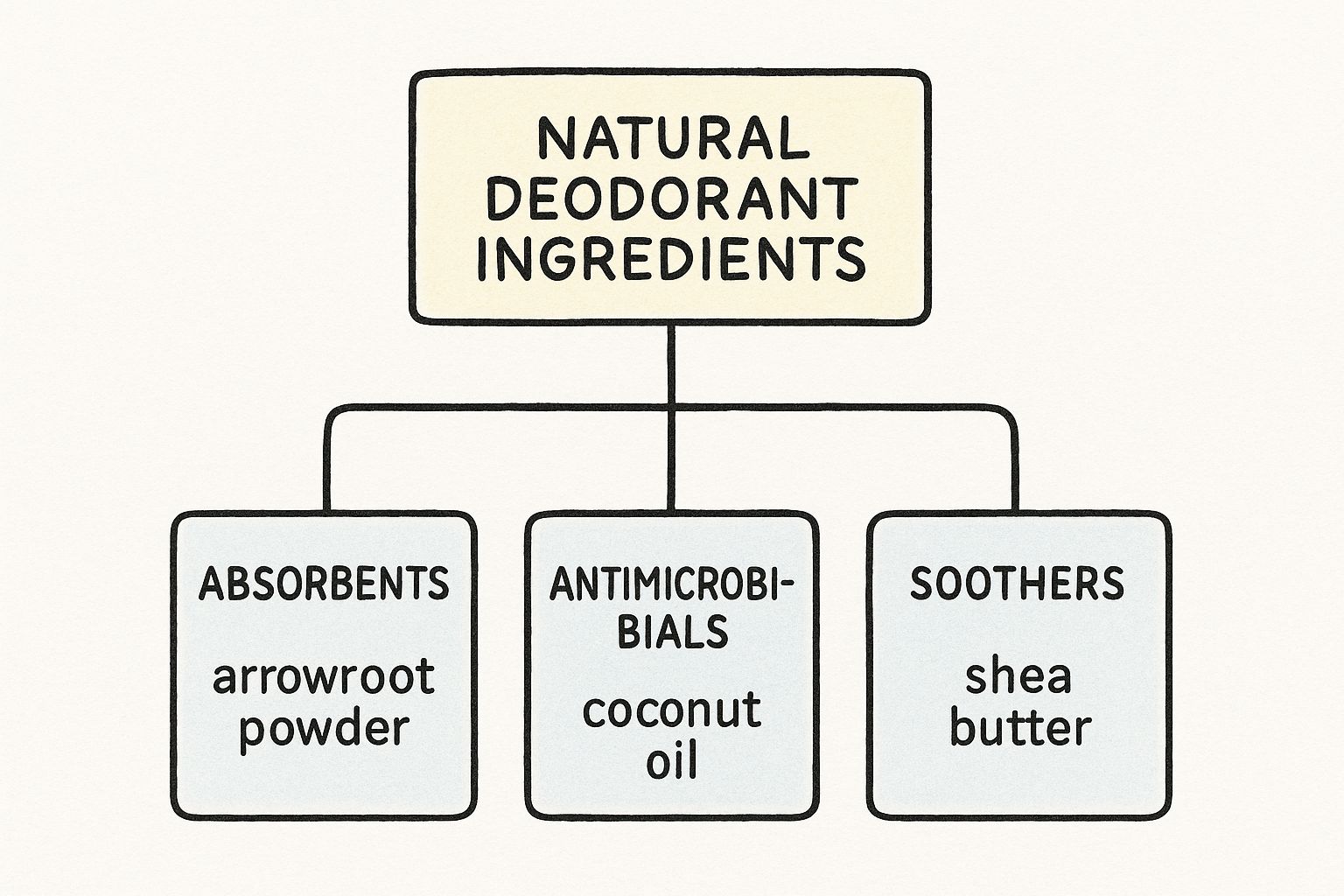
As you can see, a good formula is all about balance—combining ingredients that absorb moisture, stop odor in its tracks, and keep your skin happy.
The A-Team: Moisture Absorbers and Odor Neutralizers
The primary job of any deodorant is to tackle odor, and the best natural formulas do this by targeting wetness and bacteria. Remember, sweat itself doesn't smell. The odor we associate with B.O. is actually caused by bacteria on your skin breaking down the proteins and fats in your sweat.
This is where ingredients like powders and minerals come into play.
- Baking Soda (Sodium Bicarbonate): This is a classic for a reason. Baking soda is a champ at absorbing moisture, and its alkaline nature creates an environment where odor-causing bacteria can't party. The downside? That same high pH can be irritating for some people, especially those with sensitive skin.
- Arrowroot Powder & Cornstarch: Think of these as the gentler, plant-based alternatives. These super-fine starches are fantastic at soaking up moisture to help you feel drier. They get the job done without messing with your skin's natural balance, making them a go-to for sensitive formulas.
- Magnesium Hydroxide: A true gem for odor control. Magnesium works by neutralizing odor-causing bacteria on the surface of the skin without being absorbed. It’s incredibly effective yet gentle, which is why it’s a star player in so many baking-soda-free deodorants.
The Big Idea: Natural deodorants aren't designed to stop you from sweating—they're designed to manage it. Powders absorb the moisture, while minerals like baking soda and magnesium make your underarms an unwelcome place for odor-causing bacteria.
The Supporting Cast: Skin Soothers and Antimicrobials
Keeping odor and wetness in check is only half the battle. The skin under your arms is delicate, so a great natural deodorant will also include ingredients to nourish and protect it. This is where rich butters and oils step in, providing a smooth glide and their own subtle bacteria-fighting benefits.
You'll almost always find coconut oil or shea butter in the mix. They create a creamy, moisturizing base that prevents the dry, chalky feeling you might get from a product that’s all powders.
- Coconut Oil: Famous for its moisturizing abilities, coconut oil is also packed with lauric acid. This fatty acid has natural antimicrobial properties, giving you an extra layer of defense against odor-causing microbes.
- Shea Butter & Cacao Butter: These luxurious butters are loaded with skin-loving vitamins and fatty acids. They work to soothe, condition, and protect your skin from the irritation and dryness that can sometimes pop up, especially right after shaving.
Common Ingredients in Natural Deodorants and Their Functions
To make it easier to decode labels, here's a quick cheat sheet of the most common ingredients you'll find in an aluminum-free natural deodorant and what they're there for.
| Ingredient Category | Examples | Primary Function | Best For |
|---|---|---|---|
| Moisture Absorbers | Arrowroot Powder, Cornstarch, Kaolin Clay | Soaks up excess sweat and moisture to help keep you feeling dry. | Everyone, especially those who prioritize dryness. |
| Odor Neutralizers | Baking Soda, Magnesium Hydroxide, Zinc Ricinoleate | Creates an environment where odor-causing bacteria cannot thrive. | Those looking for powerful, all-day odor control. |
| Skin Conditioners | Shea Butter, Cacao Butter, Jojoba Oil | Nourish, soothe, and moisturize delicate underarm skin. | Everyone, particularly those with dry or sensitive skin. |
| Antimicrobials | Coconut Oil, Tea Tree Oil, Essential Oils | Provide a natural defense against bacteria that cause odor. | People who want an extra layer of antibacterial protection. |
Knowing what these key players do makes it so much easier to find a formula that's just right for your body and your lifestyle. Armed with this knowledge, you can read any label with confidence and choose the perfect deodorant for you.
Unexpected Benefits of Going Aluminum-Free
Making the switch to a natural deodorant without aluminum is about so much more than avoiding one controversial ingredient. It’s a genuine upgrade for your body and your personal care philosophy. One of the biggest wins? You’re finally letting your body do what it’s designed to do: sweat.
Sweating is your body's built-in air conditioning. It’s a completely natural and essential process. Antiperspirants use aluminum to literally plug your sweat glands, which jams up this vital cooling system. By going aluminum-free, you’re allowing your body to manage its own temperature, just as nature intended.
This simple change also has a ripple effect on your skin's microbiome. Your underarms have their own unique community of bacteria, and constantly blocking sweat can throw this delicate ecosystem out of whack. Letting your skin breathe and function properly helps maintain a much healthier environment, which is a cornerstone of overall skin health.
It's Like Skincare for Your Armpits
Beyond letting your body function naturally, many aluminum-free deodorants are packed with ingredients that actively nourish your skin. Think about it: traditional antiperspirants can be pretty harsh, but natural formulas often read more like a high-end moisturizer, featuring things like shea butter and coconut oil.
The result is often softer, smoother underarm skin. Lots of people who make the switch are surprised to see irritation, razor burn, and redness—things they just accepted as normal—start to disappear. Instead of simply blocking a function, these products actually care for your skin.
When you choose products with ingredients that support your skin, you're consciously stepping away from potentially harsh chemicals. This shift is a big deal for anyone concerned about what their body absorbs every day, which is why so many people are looking into the effects of endocrine disruptors in personal care items.
Putting Your Money Where Your Values Are
The perks of going aluminum-free often go way beyond your own body. The entire natural personal care movement is built by people who want more than just an effective product—they’re demanding transparency and ethical practices from the companies they support.
This isn't a niche trend; it's a massive market shift. The global organic deodorant market was valued at USD 138.4 million in 2024 and is expected to skyrocket to USD 316.1 million by 2030. That kind of growth is driven purely by people like you demanding cleaner, chemical-free options. You can read more about this exploding market on Grand View Research.
Brands in this space often lead the way with:
- Eco-Friendly Packaging: Think recyclable, compostable, or refillable containers that cut down on waste.
- Cruelty-Free Practices: A firm commitment to never testing on animals.
- Sustainable Sourcing: Choosing ingredients that are harvested ethically and responsibly.
By making the switch, you’re not just buying deodorant. You’re casting a vote for companies that align with your values, turning a simple daily habit into a powerful choice for both your health and the planet's.
Your Guide to a Smooth Transition Period

Making the switch to a natural deodorant without aluminum is a great move, but it helps to go in knowing there might be a little adjustment phase. You’ll often hear people call it the "armpit detox," which is really just your body’s way of recalibrating after years of using antiperspirants.
Think about it: your sweat glands have been plugged up for a long time. When you stop using aluminum-based products, you’re finally letting them breathe again. This whole process can take anywhere from one to four weeks as your body clears out the old gunk and your skin’s microbiome gets back in balance.
You might notice you're sweating more or that your body odor smells a little stronger or just… different. Don't panic! This is totally normal and temporary. It’s a good sign, actually—it means your body is getting back to its natural, healthy state. A few simple tricks will make the whole thing a breeze.
Navigating the Adjustment Phase
The best way to approach this is to see it as a reset, not an obstacle. A little preparation goes a long way in keeping you fresh and confident while your body figures things out. Patience and consistency are your best friends here.
Here’s a simple game plan to get you started:
- Start with Clean Skin: Always, always apply natural deodorant to clean, dry skin. A quick wash with a gentle soap gets rid of the bacteria that cause odor in the first place, giving your deodorant a clean slate to work its magic.
- Stay Hydrated: Guzzling water is always a good idea, but it’s especially helpful here. It helps your body flush out toxins more efficiently, which can really support the rebalancing act happening in your pits.
- Keep It Handy: For the first few weeks, you might want to reapply your deodorant during the day, maybe after the gym or on a hot afternoon. Tossing it in your bag means you’re always ready.
The goal is to support your body, not fight it. This transition is a positive sign that your sweat glands are functioning properly again. By working with your body’s natural rhythm, you set yourself up for a much better experience.
Pro Tips for a Seamless Switch
Want to give your body an extra hand during the detox? A few extra steps can help speed things up and keep any temporary odor or wetness to a minimum. These simple tricks can help clarify your skin and make the adjustment feel even easier.
- Try an Armpit Mask: This sounds fancy, but it's simple. Once or twice a week, mix up a bentonite clay mask and apply a thin layer to your underarms. Let it sit for 5-10 minutes, then rinse it off. Clay is amazing at pulling out impurities and can help sop up extra moisture and odor.
- Be Mindful of Fabrics: What you wear makes a difference. Natural, breathable fabrics like cotton, linen, and bamboo let air flow, helping sweat evaporate faster. On the other hand, synthetic materials like polyester can trap moisture and bacteria right against your skin, which can make things a little more intense during this phase.
If you set realistic expectations and follow these tips, you’ll cruise right through the transition period. Before you know it, your body will be fully adjusted, and you’ll be enjoying all the perks of your new aluminum-free routine.
How to Find the Right Natural Deodorant for You
Picking the right natural deodorant without aluminum isn't about finding one miracle product that works for everyone. It's much more personal than that. Think of it like searching for the perfect pair of jeans—what fits one person beautifully might not work for another. It's all about finding the best match for your unique body and lifestyle.
The best place to start is with your skin. Is it pretty resilient, or does it get irritated easily? If you know you have sensitive skin, I'd suggest beginning with a baking soda-free formula. Baking soda is a fantastic odor-fighter, but its high pH can sometimes lead to redness or a rash. A gentler alternative with ingredients like magnesium or arrowroot powder is often a much safer bet.
Tailoring Your Choice to Your Daily Life
Next, think honestly about your day-to-day. A deodorant that keeps you fresh while you're working from home might not be up to the task of a hot yoga class or a stressful presentation. The good news is that many brands offer different strengths to match your activity level.
- For Everyday Use: A standard formula is usually perfect for office days or just lounging around. These often contain skin-soothing ingredients like shea butter and coconut oil.
- For Active Lifestyles: If you’re hitting the gym or constantly on the go, look for labels like "extra strength" or "sport." These formulas typically pack a bigger punch with more odor-neutralizing minerals and moisture-absorbing powders.
Finally, how do you want to apply it? Natural deodorants come in a few different forms, and it really just boils down to personal preference. You've got the classic sticks, creams you apply with your fingers, and even quick-and-easy sprays. There's no right or wrong choice—go with whatever feels most comfortable and convenient for you.
The search for the perfect natural deodorant is getting easier all the time, thanks to the explosion of the clean beauty movement. The market for aluminum-free options is expected to jump from USD 3.4 billion in 2025 to USD 6.2 billion by 2035, a huge shift driven by people like you demanding safer, more transparent products. You can read more about this trend over at Future Market Insights.
Taking a moment to think through these points can make your switch to natural deodorant a huge success from the start. Listening to your body's unique needs is always the best approach, a concept that's just as true for overall wellness, which we explore in our guide to natural hormone balancing supplements.
Your Top Natural Deodorant Questions, Answered
Making the switch to an aluminum-free deodorant can feel like a big step, and it's totally normal to have a few questions. After all, you're changing a routine you've probably had for years. Let's walk through some of the most common concerns so you can feel completely comfortable and confident with your decision.
Am I Going to Sweat a Lot More?
Okay, let's be real: you might notice a bit more wetness at first. This is the biggest difference between an antiperspirant and a natural deodorant without aluminum. Antiperspirants use aluminum to literally plug your sweat glands, while natural formulas work by tackling odor-causing bacteria and absorbing moisture, not by stopping a completely natural process.
Think of it as your body finally breathing a sigh of relief. For years, your sweat glands have been blocked, and now they're free to function as they should. Most people report that their body finds a new equilibrium within a few weeks, and the amount of sweat feels much more manageable. Just remember, sweating is good for you—it’s your body’s built-in air conditioning system.
Is This "Armpit Detox" Thing for Real?
Yes, the "detox" phase is a real thing for many people, though it's less of a "detox" and more of an adjustment period. It typically lasts anywhere from two to four weeks as your body rebalances itself after you ditch aluminum-based products. Your sweat glands are essentially clearing out the old stuff, and the natural microbiome on your skin is getting back to its happy place.
You might notice some temporary shifts in how much you sweat or even a change in your body odor during this time. Don't let it throw you off! It’s actually a great sign that your body is returning to its natural rhythm. It’s a short-term hurdle for long-term freshness.
Why Do My Armpits Itch or Look Red?
If you've switched over and are suddenly dealing with an annoying rash, don't give up just yet. The most common culprit is baking soda. It's a fantastic odor-fighter, but its high pH can sometimes irritate the sensitive skin under your arms.
Thankfully, this is usually an easy problem to solve:
- Try a sensitive skin formula. Many brands now offer a natural deodorant without aluminum that is specifically "baking soda-free."
- Look at the essential oils. On rare occasions, an allergy or sensitivity to a specific essential oil might be causing the reaction.
It’s all about listening to your body. By finding the right formula for your unique skin, you can sidestep any irritation and fully embrace the benefits of going aluminum-free.
At Esoterica, we're committed to providing clear, trusted guidance for your low-tox journey. Explore our resources to make informed choices for your health and home at https://shopesoterica.co.

