
Building a non-toxic skincare routine means choosing products that are free from potentially harmful chemicals like parabens, phthalates, and artificial fragrances. It's all about picking formulas that are good for your skin and your overall health, focusing on ingredients you can trust.
Why a Non-Toxic Skincare Routine Matters
The idea of "non-toxic skincare" has really gone from a fringe concept to a full-blown movement, and it makes a lot of sense. This isn't about being scared of every ingredient on the label; it’s about making smart, informed decisions for your health in the long run. After all, your skin is your body's largest organ, and it can absorb a surprising amount of what you put on it.
The journey starts with understanding what’s in your products and choosing things that will genuinely nourish your skin, not disrupt its natural balance. The foundation of a great routine, toxic or not, always comes down to the essentials:
- Cleansing: Washing away dirt and impurities without stripping away your skin’s protective oils.
- Treating: Using serums to tackle specific issues, whether you need more hydration or want to even out your skin tone.
- Moisturizing: Sealing in moisture and keeping your skin protected.
- Protecting: Using a safe and effective sunscreen to prevent sun damage. It's non-negotiable.
The Shift Toward Conscious Choices
The move toward cleaner products is more than just a passing trend. It's part of a bigger cultural shift where people are prioritizing wellness and demanding to know what's in the things they buy. This consumer demand is forcing the beauty industry to change.
Consider this: the global clean beauty market was valued at USD 8.25 billion in 2023 and is expected to skyrocket to USD 21.29 billion by 2030. That kind of growth shows that people all over the world are actively looking for safer products for their daily routines. You can dig deeper into these consumer trends in a recent market analysis.
To put it simply, a non-toxic routine is built on a few core ideas that help you make better choices for your skin.
Key Principles of a Non-Toxic Routine
| Principle | What It Means for Your Routine | Example |
|---|---|---|
| Ingredient Transparency | You should be able to easily find and understand what's in a product. | Brands that provide a full ingredient list on their website, not just the packaging. |
| Prioritize Plant-Based | Leaning on ingredients derived from nature that are known to be gentle and effective. | Choosing a moisturizer with shea butter and jojoba oil instead of petrolatum. |
| Avoid Key "Nasties" | Actively avoiding a known list of controversial ingredients. | Skipping products with parabens, phthalates, synthetic fragrances, and sulfates. |
| Support Skin's Natural Function | Using products that work with your skin's microbiome and barrier, not against them. | A pH-balanced cleanser that doesn't leave your skin feeling tight or "squeaky clean." |
These principles aren't about perfection; they're about progress and making more mindful choices every day.
Adopting a non-toxic approach is an investment in your future health. It encourages you to become a more conscious consumer, looking beyond marketing claims to understand what truly benefits your skin.
Creating a healthier routine doesn't need to be overwhelming or break the bank. It really just starts with learning which ingredients to sidestep and discovering the incredible, effective alternatives that nature and safe science have to offer.
For a deeper dive into building your own regimen from the ground up, this detailed guide to a non-toxic skincare routine is a fantastic starting point. Think of it as the beginning of a journey that’s good for how you look and how you feel.
Decoding Labels and Identifying Harmful Ingredients

Stepping into the world of non-toxic skincare means becoming your own best advocate. Learning to read an ingredient list might feel like trying to decipher a foreign language at first, but you really don't need to memorize every chemical name to make smarter choices.
The real goal is to get good at spotting the most common red flags.
Think of yourself as a detective for your skin. Instead of getting bogged down by long, scientific names, just focus on a "most-wanted" list of ingredients. Knowing what to avoid is often far more powerful than trying to know everything. This simple shift in mindset makes shopping so much easier and helps you choose products with genuine confidence.
The Big Offenders to Watch Out For
Certain ingredients pop up again and again in conventional skincare. They’re the first ones to look for when you flip over a bottle. These are often thrown in as preservatives, stabilizers, or fragrance agents, but they come with potential health concerns that make them worth skipping entirely.
Here are a few of the main culprits to keep on your radar:
- Parabens (e.g., methylparaben, propylparaben): These are common preservatives used to stop bacteria and mold from growing in your products. The problem? They're known to mimic estrogen in the body.
- Phthalates (e.g., DEP, DBP): You’ll often find these hidden under the generic term "fragrance." Phthalates are used to make scents last longer but have been linked to a whole host of health issues.
- Synthetic Fragrance or Parfum: This single term on a label can hide a cocktail of hundreds of undisclosed chemicals. Opting for "fragrance-free" or products scented only with pure essential oils is a much safer bet.
- Sulfates (SLS and SLES): These are the cleansing agents that create that satisfying, foamy lather we’ve been taught to associate with being clean. Unfortunately, they can be incredibly harsh, stripping the skin's natural protective barrier and leading to irritation.
Many of these are classified as endocrine-disrupting chemicals (EDCs), meaning they can mess with your body's delicate hormonal balance. To get a better handle on this, you can learn all about what endocrine disruptors are and how to avoid them.
Your Digital Detective Kit
The good news is, you don't have to go it alone. Technology has made decoding labels a thousand times easier. Instead of standing in the store aisle guessing, you can use brilliant apps and databases to get instant feedback on a product's safety profile. These tools do all the heavy lifting for you.
Having a reliable app on your phone is like having a toxicologist in your pocket. It cuts through the marketing fluff and gives you the facts, helping you make an informed decision on the spot.
Some of the best resources out there are completely free and incredibly user-friendly.
Helpful Tools for Label-Checking:
- EWG Skin Deep Database: This is one of the most comprehensive resources available. You can search for thousands of products or individual ingredients and see a clear safety rating based on scientific research.
- Think Dirty App: This app lets you scan a product's barcode right in the store. It gives you a simple "Dirty Meter" rating from 0 to 10 and breaks down exactly which ingredients are raising concerns.
Using these tools helps you look past the buzzwords on the front of the package—like "natural" or "clean"—and focus on the ingredient list, which is where the truth really is. This is the single most important skill for building a truly non toxic skincare routine.
Building Your Core Morning Routine
Your morning routine is all about prepping and protecting your skin for the day. You don't need a complicated, 10-step process. In my experience, a powerful and effective non-toxic routine really just boils down to three key pillars: a gentle cleanse, a targeted treatment, and protective moisture.
The goal here is consistency. We want to choose products with ingredients that truly support our skin, not work against it. How you layer these products matters just as much as what's in them. Getting the order right allows each product to perform at its best, setting your skin up for success all day long.
The Gentle Cleanse
First thing in the morning, your skin needs a gentle refresh, not a harsh, stripping wash. Overnight, your skin is in repair mode. While it does produce some oil and shed dead cells, it doesn’t require an aggressive deep clean. This is where a mild, non-toxic cleanser comes in.
I always recommend looking for cream or gel cleansers that are free from sulfates like SLS and SLES. These are notorious for disrupting the skin's delicate protective barrier. Instead, look for formulas that respect your skin's natural balance.
- For Oily or Acne-Prone Skin: Green tea extract is a fantastic choice. Its antioxidant properties help manage sebum without over-drying.
- For Dry or Sensitive Skin: Cleansers with ingredients like oat kernel extract or chamomile are wonderful. They are known for their soothing, anti-inflammatory benefits that help calm down redness and irritation.
This simple graphic breaks down the three-part flow of a non-toxic morning routine.
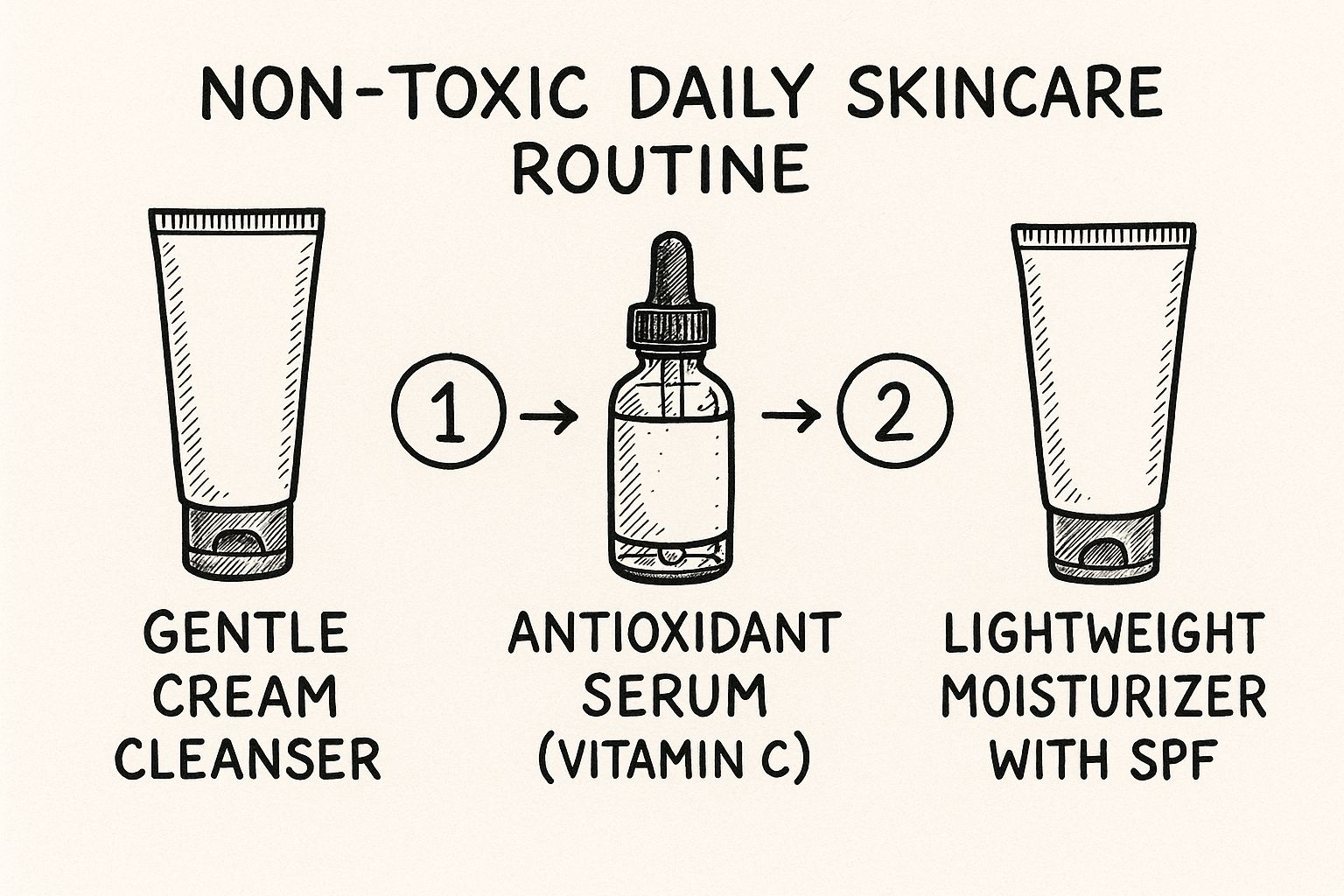
As you can see, a great routine doesn't mean a shelf full of products—just a few well-chosen essentials, applied in the right order.
Targeted Antioxidant Treatment
Once your skin is clean, it's time for a treatment serum. For a morning routine, nothing beats a solid antioxidant serum. Vitamin C is the gold standard here. Think of it as a shield that helps neutralize damaging free radicals from pollution and UV exposure you'll encounter during the day. This one step is crucial for preventing premature aging.
When you're applying your serum, a few drops on clean, slightly damp skin will do the trick—this little tip helps boost absorption. Gently press it into your skin rather than rubbing it. This is also the perfect place to customize your routine. For example, if your skin is feeling dehydrated, you could layer in a serum with hyaluronic acid right before your moisturizer for an extra drink of water.
Your morning serum is your daily dose of defense. It empowers your skin to fight off environmental stressors, keeping it brighter and healthier over time.
This proactive approach is exactly why the non-toxic movement has gained so much momentum. The market for natural skincare products was valued at around USD 21.09 billion in 2024 and is projected to hit USD 23.06 billion by 2025. This impressive 9.3% growth rate shows a massive shift in what we, as consumers, demand: safer, more transparent ingredients. You can find more data on this trend over at The Business Research Company.
Protective Moisture with SPF
The final—and arguably most critical—step is to moisturize and protect. A good non-toxic moisturizer locks in all the benefits from your serum and reinforces your skin barrier. And listen, pairing it with sunscreen is absolutely non-negotiable.
For a genuinely clean routine, I always steer people toward mineral-based sunscreens. Look for zinc oxide or titanium dioxide on the label. These ingredients work by creating a physical barrier on your skin that literally blocks harmful UV rays.
To get a better handle on what to avoid, our guide on toxic chemicals in cosmetics is a great place to start. This final layer of moisture and SPF seals in all the goodness from your routine, ensuring your skin stays hydrated, treated, and defended from the sun.
Crafting Your Restorative Evening Routine

When the day winds down, your skin’s most important work is just getting started. Nighttime is its natural window for repair and regeneration, making your evening non toxic skincare routine absolutely critical for supporting that process. This is your chance to go beyond a basic cleanse and really feed your skin.
Your evening ritual should always start with undoing the day. That means thoroughly removing every trace of makeup, sunscreen, and the city grime that’s settled on your skin. A single wash rarely cuts it and can often strip your skin’s protective oils in the process.
The Power of the Double Cleanse
This is where the double cleanse becomes a total game-changer. It’s a simple two-step method that gets your skin impeccably clean and perfectly prepped for the nourishing treatments to follow. Think of it as a deep clean that’s surprisingly gentle.
Here’s the breakdown:
- First, an oil-based cleanser. Start with a cleansing oil or a rich balm. Since oil dissolves oil, this step melts away stubborn, oil-based impurities like SPF and makeup without any effort. Just massage it onto dry skin, add a little water to emulsify, and rinse.
- Second, a water-based cleanser. Follow up with your favorite gentle gel or cream cleanser. This gets rid of any remaining residue and cleans the skin itself, leaving you with a perfectly fresh canvas.
This whole process avoids the harsh scrubbing that can compromise your skin barrier. Instead, you get a much deeper clean that leaves skin feeling soft and balanced, not tight or irritated.
Targeted Treatments for Overnight Repair
Once your skin is perfectly clean, it’s ready for targeted treatments. These are the products packed with potent ingredients that work their magic while you sleep, tackling everything from fine lines to breakouts.
While retinol is a popular anti-aging ingredient, its synthetic nature and potential for irritation mean it doesn't always fit into a non toxic skincare routine. Thankfully, nature provides some incredible alternatives that deliver amazing results without the harsh side effects.
Your evening treatment is the workhorse of your routine. Choosing a powerful, plant-based active allows your skin to repair itself effectively overnight, leading to visible improvements over time.
A great example is bakuchiol, a plant-derived ingredient that's been shown to offer collagen-boosting benefits similar to retinol but with a much lower risk of redness or peeling. Another fantastic option is niacinamide (Vitamin B3). It's brilliant for calming inflammation, shrinking the appearance of pores, and strengthening the skin barrier, which makes it a hero for acne-prone or sensitive skin.
Lock It All In with Nourishing Moisture
The final, crucial step in your evening routine is to seal everything in with a high-quality moisturizer or facial oil. This locks in the active ingredients from your serum and, just as importantly, prevents moisture from escaping your skin while you sleep—a process called transepidermal water loss.
I’m a huge fan of using facial oils for this final step. They’re brimming with antioxidants and essential fatty acids that deeply nourish the skin. My personal go-to's are rosehip oil, which is amazing for brightening and regeneration, and marula oil, a beautifully lightweight yet deeply hydrating option.
A few drops pressed into the skin create a protective seal, ensuring you wake up with a plump, glowing complexion. To truly elevate your self-care, you could occasionally incorporate professional treatments like deluxe holistic facials with natural ingredients into your overall regimen. This is your time to unwind and let your skincare do the heavy lifting.
Choosing a Non-Toxic Sunscreen Without Compromise
If there’s one non-negotiable step in any skincare routine, it's sunscreen. But let's be honest, this is also where a lot of questionable ingredients tend to hide. Finding a non-toxic sunscreen you actually enjoy wearing every day is a game-changer for your skin's long-term health.
The first thing to get a handle on is the difference between the two main types of sunscreen on the shelf. You have chemical sunscreens, which use ingredients like oxybenzone and avobenzone to absorb UV rays and convert them into heat. Then you have mineral sunscreens, which create a physical shield on your skin to block the sun. For a truly non-toxic skincare routine, this is where you want to focus your attention.
Mineral Sunscreens: The Gold Standard
When you're building a clean routine, mineral formulas are really the only way to go. Their active ingredients are simple, naturally occurring minerals like zinc oxide and titanium dioxide. Instead of being absorbed into your bloodstream, they just sit on the surface of your skin, providing fantastic broad-spectrum protection. This makes them a much safer bet, especially if your skin is sensitive or prone to breakouts.
Let’s bust a myth right now: the idea that all mineral sunscreens are thick, pasty, and leave a ghostly white cast is completely outdated. Today’s best formulas are surprisingly elegant, lightweight, and blend seamlessly.
You no longer have to choose between safety and a product that feels good. Modern non-toxic sunscreens are sophisticated and a pleasure to use. The key is finding the right one for you, and our guide on the best non-toxic sunscreen is the perfect place to start your search.
This isn't just a niche trend; it's a massive shift in consumer awareness. The organic personal care market was valued at USD 34.2 billion in 2025 and is projected to hit USD 76.4 billion by 2035. That kind of growth speaks volumes about how many of us are demanding cleaner, healthier products.
If you're looking for sunscreens that are famously effective yet gentle, it's worth exploring the world of Japanese sunscreen for sensitive skin for some truly beautiful formulas.
Application and Reapplication Tips
Getting the most out of your mineral sunscreen really comes down to how you apply it. Think about a nickel-sized dollop just for your face, and always make it the final step in your morning routine, right after your moisturizer has had a moment to sink in.
Keep these simple rules in mind:
- Give it about 15 minutes to set before you go outside.
- Reapply every two hours, minimum.
- If you’re swimming or sweating, you'll need to reapply more often.
It’s all about consistency. Once you find a non-toxic mineral sunscreen you love and make it a daily habit, you can feel confident that you’re protecting your skin the right way, every single day. No compromises needed.
Common Questions About Non-Toxic Skincare

Making the leap to cleaner skincare naturally brings up a lot of questions. Getting clear answers is the best way to feel confident and stick with your new routine, so let's tackle some of the most common things people ask.
Navigating this world is all about progress, not perfection. Once we clear up these common hurdles, you'll be well on your way to building a non-toxic skincare routine that works for you.
How Long Until I See Results?
Patience is key here. Think of it this way: non-toxic products are designed to work with your skin’s natural rhythm, not force an overnight change. Because of this, results tend to show up more gradually.
Your skin goes through a full renewal cycle every 28 days, so give any new product or routine at least a month before you start looking for major shifts. You'll likely feel an immediate difference in things like hydration or see less redness within a week. But for deeper concerns like stubborn dark spots or fine lines, you'll want to stay consistent for 3-6 months to see the real magic happen.
Don't be surprised if you have a short "purging" period with a few minor breakouts. It's often just a sign that your skin is clearing out the old stuff to make way for the new.
Are "Natural" and "Organic" Always Non-Toxic?
This is a big one, and the short answer is no, not necessarily. "Natural" and "organic" are powerful marketing words, but they aren't strictly regulated in the beauty industry. A product can be labeled "natural" and still hide irritating fragrances or synthetic preservatives in the formula.
"Organic" is a bit more specific—it refers to how the ingredients were farmed. That's great, but it doesn't automatically mean the final product is free from other undesirable additives.
The most reliable approach is to ignore the buzzwords on the front of the bottle. Instead, flip it over and become a detective for the ingredient list—that's where the real story is.
Focusing on the ingredients you want to avoid is a much smarter strategy than just trusting the marketing claims on the label.
Can I Build a Routine on a Budget?
You absolutely can. A high-performing non-toxic skincare routine doesn't have to break the bank. In fact, many fantastic clean brands are surprisingly affordable. The secret is to keep things simple and focus on the essentials.
Where should you put your money? Start with the core, non-negotiable products:
- A gentle, sulfate-free cleanser that won’t strip your skin's protective barrier.
- A nourishing moisturizer packed with plant-based ingredients to hydrate and protect.
- A high-quality mineral sunscreen for non-negotiable daily defense.
When you prioritize these basics and get good at reading ingredient labels, you can easily find budget-friendly gems that work just as well as—if not better than—their expensive counterparts. It's all about being a smart shopper.
At Esoterica, we're committed to empowering you with the knowledge to make safer, more informed choices for your home and body. Explore our resources to continue your journey toward a low-tox life. Learn more at https://shopesoterica.co.

